
The Variety of Coffee Pods & Capsules – Brand Comparison
The Variety of Coffee Pods & Capsules – Brand Comparison
The UK coffee scene has changed rapidly over the past decade. Consumers now drink barista‑style coffee at home using convenient pods and capsules instead of only instant coffee or café drinks (Mintel, 2025).
This shift has created a crowded market, with major brands competing on flavour, price, and sustainability.
Coffee pods and capsules offer a quick way to enjoy espresso, lungo, or flavoured drinks at home.
However, not all systems are compatible, and not every brand suits every taste. Understanding the differences helps UK coffee lovers choose the right option for their lifestyle and budget.
Growth of Coffee Pods in the UK
The UK coffee pods market has grown strongly as at‑home coffee culture matures. Market research indicates that UK coffee pod sales are forecast to rise from around USD 898 million in 2025 to more than USD 1.15 billion by 2030 (Knowledge Sourcing Intelligence, 2025).
This growth reflects consumers’ desire for convenience, consistency, and café‑style coffee at home.
Analysts highlight several drivers behind this trend. Busy lifestyles, the cost‑of‑living squeeze, and a desire to recreate coffee shop experiences at home all encourage households to invest in pod machines and premium capsules (FreshGround, 2025).
At the same time, online shopping and supermarket ranges make it easy to try multiple brands and flavours.
Pods vs Capsules: Key Definitions
The terms “pods” and “capsules” often appear together, but they are not identical. In simple terms, pods are usually soft, paper‑based portions of ground coffee, while capsules are hard, sealed containers made of plastic, aluminium, or compostable materials (Straits Research, 2025). Both formats are designed for single‑serve brewing and consistent extraction.
Soft pods often suit machines that resemble filter coffee systems. Capsules tend to be used in proprietary systems such as Nespresso, Nescafé Dolce Gusto, or Tassimo. Because of these differences, compatibility is a crucial factor when UK consumers choose a brand or machine.
Major Pod and Capsule Systems in the UK
Nespresso and Nespresso‑Compatible Capsules
Nespresso remains one of the most recognisable capsule brands in the UK. The company built its reputation around espresso‑focused aluminium capsules and sleek machines designed for home and office use. Global market analyses list Nestlé, Nespresso’s parent company, as a leading player in the coffee pods sector (Technavio, 2025).
Nespresso’s range covers classic espresso blends, single‑origin coffees, and limited editions.
In addition to official Nespresso capsules, UK shoppers can buy many “Nespresso‑compatible” alternatives from supermarket brands and independent roasters. These compatible capsules often focus on lower prices, speciality beans, or sustainable materials. However, extraction quality can vary between brands and machines, so some trial and error is often necessary.
Nescafé Dolce Gusto
Nescafé Dolce Gusto targets UK households that want both coffee and speciality drinks such as hot chocolate and flavoured lattes. The system uses plastic capsules and offers a wide range of beverages tailored to family use. Market reports frequently highlight Nescafé Dolce Gusto as a key competitor in the pods segment, especially in mainstream retail channels (Research and Markets, 2024).
Because of the multi‑drink positioning, Dolce Gusto appeals to households where not everyone drinks espresso.
Tassimo
Tassimo, backed by major FMCG groups, uses barcode technology to adjust brewing time, temperature, and water volume for each drink. The brand offers coffee, tea, and hot chocolate discs, known as T‑Discs. Industry reports often describe Tassimo as a significant player in the multi‑drink capsule segment, especially via supermarket distribution (Global Market Insights, 2025).
For some consumers, this flexibility justifies the system’s proprietary nature.
Senseo, ESE and Soft Pods
Senseo and ESE (Easy Serving Espresso) pods represent the softer, pad‑style end of the market. These pods usually consist of ground coffee wrapped in a paper filter. They are more common in continental Europe, but still available through UK online retailers and specialist shops. Analysts classify these products under “soft pods,” which form a smaller share of the UK market compared with hard capsules (Knowledge Sourcing Intelligence, 2025).
Their eco‑profile can be attractive, yet machine compatibility remains more limited.
Popular UK Coffee Pod Brands
Nespresso and Vertuo
Nespresso offers Original and Vertuo lines in the UK, each with its own capsule shape and brewing technology. Original focuses on espresso and smaller drinks, while Vertuo relies on barcode recognition for different cup sizes. Industry data show that caffeinated pods hold the majority share of revenues in UK pods markets, supported by strong urban coffee culture (Grand View Research, 2022).
Nespresso capitalises on this trend through bold espresso blends and premium marketing.
Costa Coffee Pods
Costa Coffee, a major UK high‑street chain, sells branded coffee pods compatible with Nespresso and other capsule systems. Recent reports note that Costa has expanded its pod range with recyclable capsules targeted at cost‑conscious consumers who prefer brewing at home instead of buying takeaway drinks (Knowledge Sourcing Intelligence, 2025).
For loyal Costa customers, pods provide a familiar flavour profile with greater convenience.
Starbucks by Nespresso and Other Collaborations
Starbucks partners with Nespresso and other system providers to offer branded coffee capsules through supermarkets and online platforms. Global pod market analyses list Starbucks’ parent company as one of the key manufacturers in single‑serve coffee products (Technavio, 2025). These co‑branded products combine Starbucks’ flavour recognition with established pod systems, which attracts consumers looking for café brands at home.
Private‑Label and Supermarket Brands
Supermarkets such as Tesco, Sainsbury’s, and Aldi offer own‑brand pods that fit established machines.
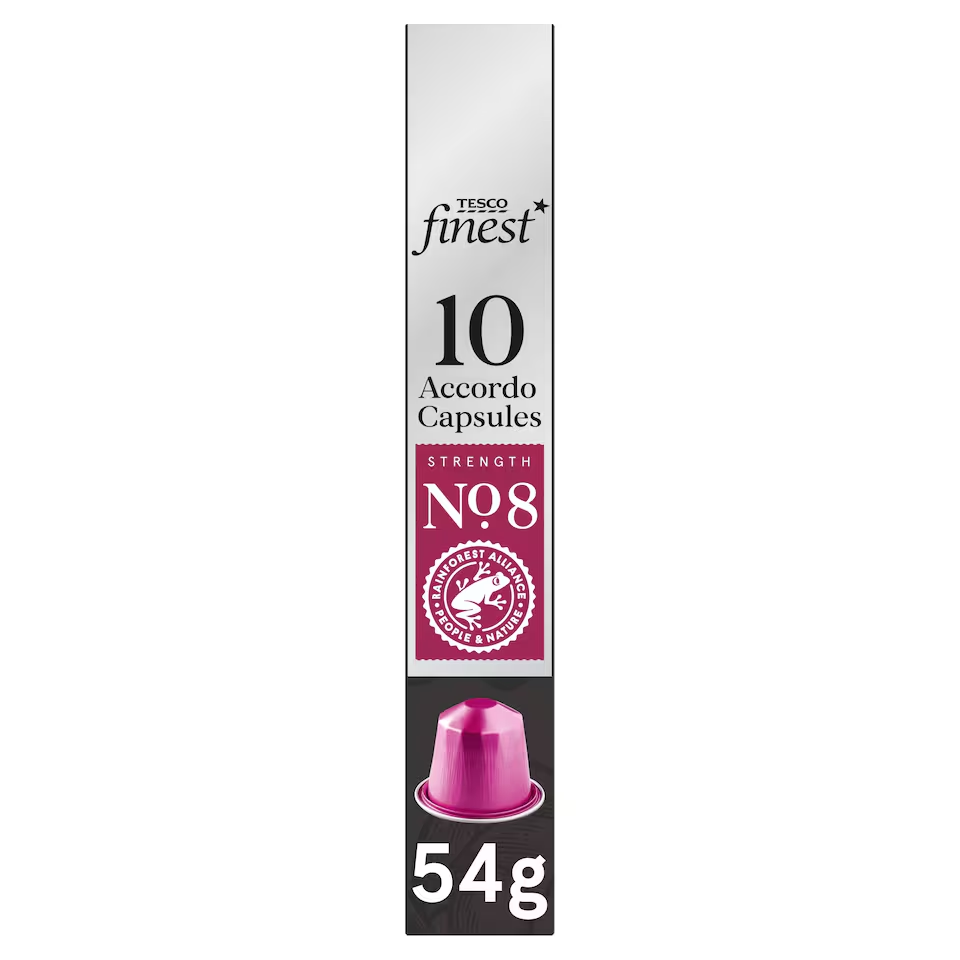
Sainsbury’s
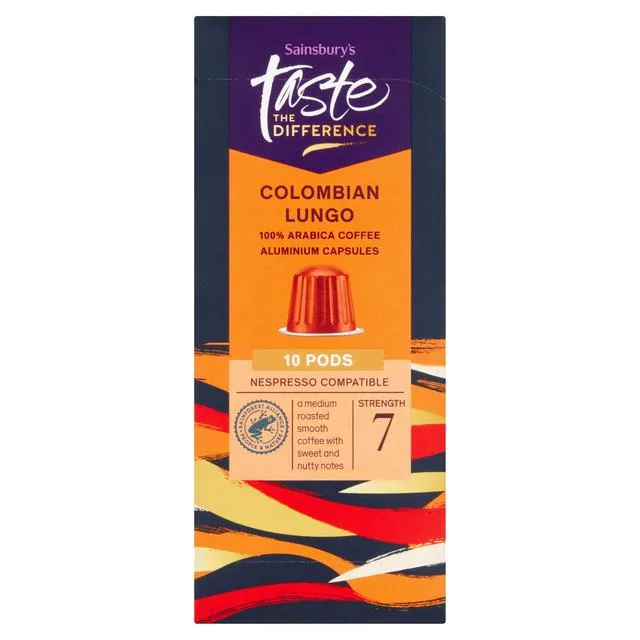
Sainsbury’s Colombian Lungo, Taste the Difference x10 52g
ALDI
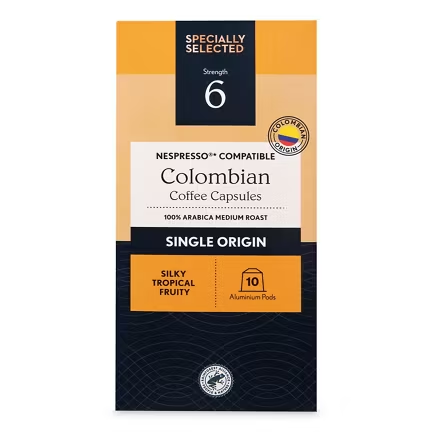
Single Origin 100% Arabica Medium Roast Colombian Coffee Capsules 10 Pack
Market reports describe strong growth in private‑label coffee due to price sensitivity and improved quality perceptions among UK shoppers (Mintel, 2025).
Many private‑label capsules now highlight origin, roast level, and sustainability credentials to compete with premium brands.
Key Comparison Factors for UK Consumers
Flavour and Roast Profile
Flavour remains the most important factor when choosing pods and capsules. Research on UK coffee consumers indicates growing interest in speciality flavour notes, single‑origin beans, and darker roasts suitable for milk‑based drinks (Mintel, 2025).
Many consumers expect café‑style espresso, cappuccino, and latte from their pod machines.
Brands respond with broader flavour portfolios, from intense espresso blends to flavoured options such as caramel or vanilla. As a result, buyers can experiment with multiple styles without changing their brewing method.
This variety supports ongoing engagement with pod systems and encourages brand switching.
Price and Value per Cup
Price per capsule and value per cup matter strongly in the current economic climate. Reports on the UK coffee market note that the cost‑of‑living crisis encourages people to seek better value from at‑home coffee, often trading down from café visits to pod‑based brewing (FreshGround, 2025).
However, consumers still want quality, so they assess the balance of cost, flavour, and convenience.
Premium brands such as Nespresso typically charge more per capsule than supermarket labels. Yet many consumers accept the higher price if they perceive better taste, stronger branding, or superior sustainability. Clear price‑per‑cup comparisons on packaging and online listings help shoppers make informed decisions.
Machine Compatibility and Ecosystems
Pods and capsules operate within closed or semi‑open ecosystems. Market research explains that capsules for certain machines, such as Nespresso Original, now include a mix of official and compatible brands, while other systems remain more restricted (Straits Research, 2025).
This ecosystem structure affects choice, pricing, and long‑term loyalty.
Before buying a new machine, UK consumers should consider which brands and flavours they want access to. Those who prioritise flexibility might choose a system with many compatible capsules. Others may prefer exclusive ecosystems if they value a specific brand’s consistency and design.
Sustainability and Recycling
Sustainability is increasingly important in UK purchasing decisions. Single‑use pods raise questions about packaging waste, carbon emissions, and recycling infrastructure. Market studies highlight growing demand for recyclable, compostable, or biodegradable pods, as well as improved recycling schemes for aluminium capsules (Knowledge Sourcing Intelligence, 2025). Many brands now advertise their environmental initiatives prominently.
For example, several manufacturers offer collection points or mail‑back schemes for used capsules. Some retailers stock compostable pods compatible with popular machines. Consumers who prioritise sustainability may factor in these schemes when comparing brands, even if sustainable options cost slightly more.
UK Consumer Trends: At‑Home Barista Culture
The rise of pods and capsules aligns with a broader shift toward at‑home barista culture. Studies on the UK coffee market show that many drinkers believe they can create drinks at home that match or surpass coffee shop quality, especially with modern machines and premium ingredients (Mintel, 2025).
Pod systems make this process simple by standardising dose, grind, and extraction.
At the same time, consumers are becoming more knowledgeable about origin, roast, and brewing techniques. This “connoisseur spirit” encourages experimentation with different brands, intensities, and limited editions. Pods and capsules offer a convenient canvas for this curiosity without requiring specialist equipment or skills.
Comparing Brands: Practical Guidance
When comparing coffee pod and capsule brands in the UK, several practical steps can help consumers find the right match:
- Check which systems a household already owns and whether they allow third‑party capsules.
- Compare price per capsule and per cup across brands using supermarket or online listings.
- Review flavour descriptions and intensity scales, which most brands publish to guide new users.
- Look for sustainability information, including recyclability, compostability, and ethical sourcing claims.
- Consider buying variety packs or mixed boxes to sample several blends before committing.
These steps align with recommendations from market analysts who emphasise value, flavour, and sustainability as key purchase drivers in the UK coffee category (FreshGround, 2025).
Future Outlook for Coffee Pods and Capsules
Forecasts suggest that the global coffee pods and capsules market will continue to expand over the next decade, with strong contributions from European and UK consumers (Global Market Insights, 2025).
Analysts expect ongoing innovation in flavours, functional ingredients, and packaging materials. Decaffeinated and speciality segments are also projected to grow faster than traditional instant coffee.
Within the UK, the at‑home coffee segment is likely to benefit from sustained interest in premium experiences without café prices. Reports predict that the coffee pods market will keep growing at a moderate compound rate, supported by machine penetration, online retail, and evolving consumer preferences (Straits Research, 2025).
Brands that balance taste, value, and sustainability will be best placed to capture this demand.
Reference List (Harvard Style)
FreshGround (2025) Is the UK coffee market growing? Available at: https://freshground.co.uk/learning-hub/is-the-uk-coffee-market-growing/ (Accessed 26 December 2025).
Global Market Insights (2025) Coffee Pods Market Size & Share, Statistics Report 2025–2034. Available at: https://www.gminsights.com/industry-analysis/coffee-pods-market (Accessed 26 December 2025).
Grand View Research (2022) UK Coffee Pods Market Size & Outlook, 2024–2030. Available at: https://www.grandviewresearch.com/horizon/outlook/coffee-pods-market/uk (Accessed 26 December 2025).
Knowledge Sourcing Intelligence (2025) UK Coffee Pods Market Size, Share, Opportunities, And Trends, 2025–2030. Available at: https://www.knowledge-sourcing.com/report/uk-coffee-pods-market (Accessed 26 December 2025).
Mintel (2025) UK Coffee Market Report 2025. Available at: https://store.mintel.com/report/uk-coffee-market-report (Accessed 26 December 2025).
Research and Markets (2024) Coffee Pods Market 2025–2029. Available at: https://www.researchandmarkets.com/reports/5143034/coffee-pods-market-2025-2029 (Accessed 26 December 2025).
Straits Research (2025) United Kingdom Coffee Pods Market Size & Outlook, 2025–2033. Available at: https://straitsresearch.com/vertex/insights/coffee-pods-market/united-kingdom (Accessed 26 December 2025).
Technavio (2025) Coffee Pods and Capsules Market Size 2025–2029. Available at: https://www.technavio.com/report/coffee-pods-and-capsules-market-analysis (Accessed 26 December 2025).


Hello, its fastidious post on the topic of media print, we all
know media is a fantastic source of facts.
Hey there! Someone in my Facebook group shared this website with us so I came to give it a look.
I’m definitely enjoying the information. I’m book-marking and will be tweeting this to my followers!
Superb blog and amazing style and design.
Hello, I enjoy reading all of your article. I wanted to write a little comment
to support you.
You are so cool! I do not believe I’ve truly read
through something like this before. So great to find another person with a few unique thoughts on this topic.
Really.. many thanks for starting this up.
This site is something that’s needed on the web, someone with some originality!
I always used to study post in news papers but now as I am a user
of net thus from now I am using net for content,
thanks to web.
Hey! This post couldn’t be written any better! Reading through this post reminds me of my
good old room mate! He always kept talking about this.
I will forward this post to him. Pretty sure he will have a good read.
Thanks for sharing!
This is a very good tip particularly to those fresh to the blogosphere.
Simple but very accurate information… Thanks for sharing this one.
A must read article!
I know this web page offers quality based articles and extra stuff, is there any other website which provides these stuff in quality?
hello!,I love your writing very much! share we keep up a correspondence
more approximately your article on AOL? I need an expert in this space to solve my
problem. Maybe that is you! Looking forward to look you.
Your style is unique in comparison to other folks I have read stuff from.
I appreciate you for posting when you have the opportunity, Guess I’ll just bookmark this blog.
Really when someone doesn’t know after that
its up to other people that they will assist, so here
it occurs.
This is the right web site for anyone who would like to understand
this topic. You realize so much its almost hard to argue with you (not that I
really will need to…HaHa). You definitely put a fresh spin on a subject that’s been discussed
for ages. Excellent stuff, just great!
Has anybody had this procedure and happy to share their experience or what they recognize?
bookmarked!!, I love your blog!
What’s up, yeah this paragraph is really pleasant and I have learned lot of things from it regarding blogging.
thanks.
Heya i’m for the primary time here. I came across this board and
I find It really useful & it helped me out much. I’m hoping to present something again and
help others such as you helped me.
Awesome blog! Do you have any tips for aspiring writers?
I’m hoping to start my own website soon but I’m a little lost on everything.
Would you recommend starting with a free platform like WordPress or
go for a paid option? There are so many options out there that I’m totally overwhelmed ..
Any suggestions? Bless you!
I think this is among the most important information for me.
And i’m glad reading your article. But should remark on some general things,
The web site style is wonderful, the articles is really excellent :
D. Good job, cheers