If you love coffee, discovering new coffee blends can feel like unlocking a world of flavour.
Looking to Explore the World of Coffee Blends?
The UK coffee scene is thriving, and more people are exploring coffee blends to find the perfect balance of taste, aroma, and body.
Whether you start your day with a smooth breakfast brew or a punchy espresso, understanding blends can change the way you enjoy your daily cup.
According to the International Coffee Organization, global coffee consumption continues to rise every year, with the UK positioned among Europe’s fastest‑growing premium coffee markets (International Coffee Organization, 2024).
The appeal of blends lies in consistency, creativity, and versatility — allowing home brewers and baristas alike to explore diverse taste experiences.
Understanding Coffee Blends
Coffee blends are carefully crafted combinations of beans from different origins. Roasters create these blends to achieve balance, desired flavour profiles, and year‑round consistency (Hoffmann, 2018).
Blending beans allows experts to combine the best qualities of multiple regions — acidity from East Africa, sweetness from Central America, and depth from Asia.
In contrast, single‑origin coffees focus on beans from one region or estate. These coffees highlight local soil, altitude, and climate characteristics. While single origins offer purity, blends provide harmony — something UK coffee drinkers increasingly look for when shopping online (BBC Good Food, 2024).
Why Choose Blends Over Single Origin?
Blends play an essential role in both cafes and households. They bring:
- Consistency: A reliable flavour profile throughout the year, even if one region’s harvest changes.
- Complexity: A layered spectrum of notes — cocoa, fruit, nuts, or spice — balanced perfectly.
- Affordability: Blends deliver impressive flavour without exorbitant pricing.
Moreover, blends allow roasters to express creativity by mixing origins, roast levels, and bean varieties. This mix helps local coffee shops craft signature blends that reflect their identity (Fairtrade Foundation, 2024).
Popular Coffee Blends in the UK
The UK coffee market features numerous blends catering to varied palates. Below are some common styles every British coffee lover should know.
1. Espresso Blends
Espresso blends are the backbone of UK cafés. They combine Arabica and Robusta beans for a strong body, creamy crema, and deep chocolatey tones (Illy & Viani, 2005).
These blends handle high‑pressure brewing well and form the base for cappuccino, flat white, and latte drinks.
2. Breakfast Blends
UK households often start their day with breakfast blends. These are typically light to medium roast coffees that deliver a crisp, refreshing taste. Beans from Latin America dominate these blends, providing bright acidity and citrusy flavour.
3. House Blends
Every café has its own “house blend” that defines its signature taste. Often medium roasted, house blends balance sweetness, acidity, and smooth texture, catering to a wide audience.
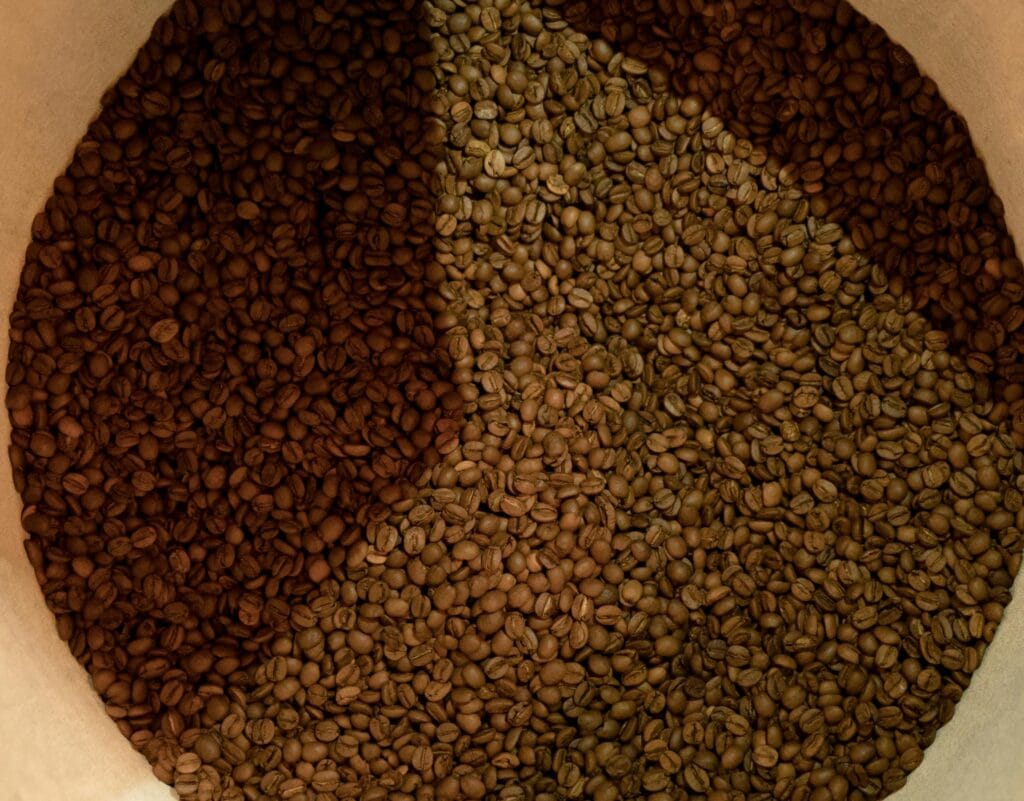
4. Dark Roast Blends
Dark roast blends have rich, smoky flavours and lower acidity. They’re popular among those who enjoy intense, bold coffee and prefer reduced bitterness through milk‑based drinks (Hoffmann, 2018).

Bitterroot Coffee Blend (Dark French Roast) from Sustainably B-Corp Certified Suppliers
Understanding Flavour Profiles
Coffee flavour depends on growing region, processing, and roast. The Specialty Coffee Association’s flavour wheel shows over 100 possible tasting notes — from floral to nutty (Specialty Coffee Association, 2021).
- Acidity: Adds brightness. Kenyan coffees often carry citrus flavours.
- Body: The tactile weight of coffee, ranging from light and tea‑like to syrupy.
- Sweetness: Often caramel, chocolate, or fruit‑based notes that smooth out bitterness.
- Bitterness: Natural in coffee, though excessive bitterness suggests over‑roasting.
These components interact to create a balanced blend that pleases the UK palate, which traditionally prefers smooth, chocolatey tones over ultra‑acidic ones (RAVE Coffee, 2024).
Popular Coffee Beans for Blending
Arabica vs Robusta
Arabica beans, with their smooth and nuanced flavour, dominate UK coffee consumption. Robusta adds caffeine, crema, and bitterness — essential for espresso strength.
Most roasters combine both for texture and edge.
Specialty Coffee Beans
Specialty‑grade beans undergo rigorous grading for quality and origin traceability. UK roasters increasingly incorporate these in premium blends for customers demanding ethical and flavourful coffee (Fairtrade Foundation, 2024).
Sustainable Sourcing
British consumers look for Fairtrade, Rainforest Alliance, and organic certifications when buying coffee. Ethical sourcing supports farmers while protecting ecosystems — an approach approved by sustainability experts in the UK coffee supply chain (FreshGround, 2025).
Brewing Methods for Coffee Blends
Different brewing techniques emphasise unique flavour features:
Espresso Machine
Brews with high pressure, highlighting crema and bold notes. Perfect for espresso‑based blends.
French Press
Extracts full‑bodied flavours through immersion. Use coarser grinds for a rich mouthfeel.
Pour‑Over
Ideal for lighter roasts. It accentuates clarity and nuanced tasting notes loved by specialty coffee drinkers.
AeroPress
Combines immersion and pressure to create smooth, quick cups. It’s a favourite among travellers and UK students.
Cold Brew
Uses cold water for gradual extraction. Produces sweet, low‑acid blends perfect for summer.
These methods allow flexibility and experimentation, appealing to both baristas and casual coffee lovers (BBC Good Food, 2024).
How to Choose the Perfect Coffee Blend
When searching for the best coffee in the UK, consider:
- Flavour Profile: Decide whether you prefer fruity, nutty, or chocolate‑forward flavours.
- Brewing Style: Different blends perform better in espresso vs. filter methods.
- Roast Level: Lighter roasts preserve acidity; darker roasts bring smoky depth.
- Origin Mix: Explore Latin American, African, or Asian bean combinations.
Your ideal blend will match your morning mood and brewing equipment. Experimentation remains the key to finding your perfect cup (Coffeeblog, 2024).
Storage Tips for Maximum Freshness
Freshness defines your coffee’s taste. Follow these steps:
- Store beans in airtight containers to block oxygen.
- Avoid moisture, heat, and direct sunlight.
- Grind beans immediately before brewing.
- Use within four weeks of roasting for best flavour results.
Proper storage ensures every cup maintains aroma and complexity (Hoffmann, 2018).
Experimenting and Creating Your Own Blends
Home baristas increasingly create custom blends to suit individual tastes. Try mixing:
- 60% Brazilian Arabica (base sweetness)
- 30% Ethiopian Yirgacheffe (floral acidity)
- 10% Vietnamese Robusta (crema and strength)
Log experiments in a coffee journal. Note brewing ratios, grind size, and results — a great learning habit for anyone passionate about coffee craft (Illy & Viani, 2005).
Coffee, Community, and Sustainability
Sustainability defines modern coffee culture. UK consumers increasingly link great taste with responsible sourcing. Fairtrade and organic initiatives ensure farmers receive fair wages and adopt eco‑friendly cultivation methods (Fairtrade Foundation, 2024).
Supporting local roasters also matters. Independent UK coffee companies often roast small batches, ensuring freshness and traceability while reducing waste. Environmentally conscious brands are even developing biodegradable packaging and traceable blockchain sourcing — vital trends that dominate 2025 coffee market forecasts (Knowledge Sourcing Intelligence, 2025).
Coffee Culture in the UK
The UK’s coffee landscape blends tradition and innovation. From London’s third‑wave roasteries to small‑town cafés in Cornwall, artisanal coffee defines modern British daily life. Recent research outlines that over 80% of UK adults now consume coffee in some form each day (Lumina Intelligence, 2025).
Consumers also embrace digital tools — using subscription boxes, apps, and home brewing guides to learn continuously about blends and brewing. Social media further drives discovery, as trends like “barista‑style home coffee” dominate Google UK searches.
The Role of Baristas in Popularising Blends
Baristas are educators, not just servers. They explain roast profiles, brewing ratios, and sensory notes. Their influence in shaping public taste cannot be overstated — both in physical cafés and online tutorials. Many UK baristas host digital workshops featuring topics such as latte art and home espresso mastery (Donhesh, 2024).
These professionals help demystify the science behind brewing, boosting appreciation for the craft — another driver of the UK’s growing coffee‑at‑home movement.
The Future of Coffee Blends
The UK’s coffee blend industry shows no signs of slowing. Premiumisation continues as consumers trade quantity for quality. New technology trends, such as AI‑driven roasting profiles and precision brewing devices, promise even more personalisation.
Meanwhile, sustainability technology — from compostable packaging to carbon‑neutral roasting — will reshape how brands compete (Statista, 2025).
As roasters experiment with fermentation and origin layering, tomorrow’s blends will surprise even seasoned coffee lovers. For consumers, the message remains simple: keep sampling, keep learning, and let your palate guide the journey.
Reference List (Harvard Style)
BBC Good Food (2024) Best Coffee Beans in the UK. Available at: https://www.bbcgoodfood.com/review/best-coffee-beans (Accessed 26 December 2025).
Coffeeblog (2024) Best Place to Buy Coffee Beans Online UK. Available at: https://coffeeblog.co.uk/best-place-buy-coffee-beans-uk-online/ (Accessed 26 December 2025).
Donhesh (2024) SEO for Cafes: Promoting Coffee Shops. Available at: https://donhesh.com.au/blog/seo-for-cafes-promoting-coffee-shops-and-attracting-customers/ (Accessed 26 December 2025).
Fairtrade Foundation (2024) Coffee Farmers and Workers. Available at: https://www.fairtrade.org.uk/farmers-and-workers/coffee/ (Accessed 26 December 2025).
FreshGround (2025) Is the UK Coffee Market Growing? Available at: https://freshground.co.uk/learning-hub/is-the-uk-coffee-market-growing/ (Accessed 26 December 2025).
Hoffmann, J. (2018) The World Atlas of Coffee: From Beans to Brewing – Coffees Explored, Explained and Enjoyed. 2nd ed. London: Mitchell Beazley.
Illy, A. and Viani, R. (2005) Espresso Coffee: The Science of Quality. London: Academic Press.
International Coffee Organization (2024) World Coffee Consumption. Available at: http://www.ico.org/prices/new-consumption-table.pdf (Accessed 26 December 2025).
Knowledge Sourcing Intelligence (2025) UK Coffee Market Report. Available at: https://www.knowledge-sourcing.com/report/uk-coffee-pods-market (Accessed 26 December 2025).
Lumina Intelligence (2025) UK Coffee Market Statistics 2025. Available at: https://www.lumina-intelligence.com/blog/foodservice/uk-coffee-market-size-growth-share-statistics-2025/ (Accessed 26 December 2025).
RAVE Coffee (2024) Best Sellers and Specialty Blends. Available at: https://ravecoffee.co.uk/collections/best-sellers (Accessed 26 December 2025).
Specialty Coffee Association (2021) The Coffee Taster’s Flavor Wheel. Available at: https://sca.coffee/research/coffee-tasters-flavor-wheel (Accessed 26 December 2025).
Statista (2025) Coffee Market Outlook: United Kingdom. Available at: https://www.statista.com/outlook/cmo/beauty-personal-care/united-kingdom (Accessed 26 December 2025).