Running a business as a coffee shop owner in the UK can feel exciting and exhausting at the same time. The days start early, and they often end late. Yet many café owners dream not only of profit but also of a sustainable, happy life.
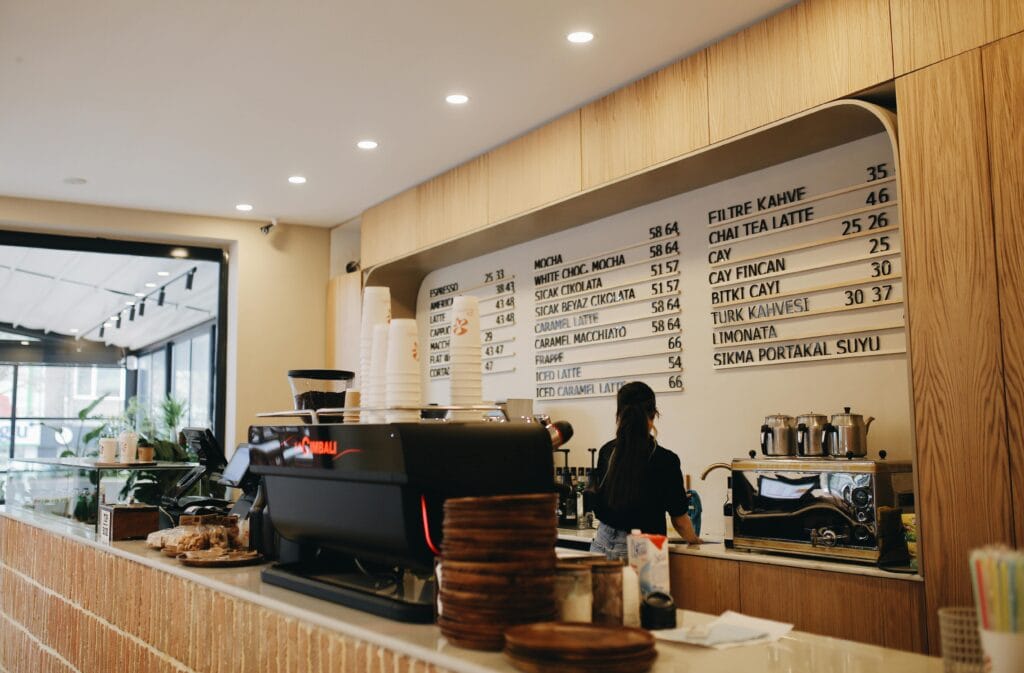
Creating Work‑Life Balance When You Run a Coffee Shop
The UK beauty and wellness trend shows that more people now see self‑care and mental health as essential, not optional (British Beauty Council, 2025).
This mindset should also apply to you as an entrepreneur.
When you learn how to build work‑life balance, your coffee business and your wellbeing can grow together.
Why Work‑Life Balance Matters for Coffee Shop Owners
Coffee shop owners face long shifts, staff issues, and rising costs. Because of these pressures, burnout becomes a real risk. However, good balance helps you protect your health, creativity, and relationships.
Research on UK personal care and beauty shows how self‑care can support productivity and resilience during economic stress (PolicyBee, 2025).
Similarly, café owners who prioritise rest and boundaries often manage stress more effectively and make clearer decisions.
Work life balance coffee shop owner – Your Role
As a coffee shop owner, you wear many hats. You might act as barista, accountant, marketer, and cleaner in the same day. Therefore, it helps to see yourself not only as a business owner but also as a person with limits.
In the UK, small businesses dominate many service sectors. Most beauty and personal care firms employ fewer than ten people (PolicyBee, 2025). Coffee shops show similar patterns. Small teams mean owners stay very hands‑on. Consequently, conscious planning is vital if you want a realistic work‑life balance.
Setting Clear Boundaries as Coffee Shop Owner
Healthy boundaries are the foundation of work‑life balance. Without them, your coffee shop can swallow every waking hour.
Use these steps to define your limits:
- Decide your latest finish time on most days.
- Set one or two days a week for true rest.
- Avoid checking emails constantly after closing.
UK wellbeing campaigns highlight how small changes in daily habits can protect mental health and support long‑term resilience (NHS, 2023). Simple digital boundaries, like switching off notifications at night, can help you feel more present at home.
Designing Sustainable Opening Hours
Many café owners feel pressure to open as long as possible. However, more hours do not always mean more profit. Instead, they can lead directly to exhaustion.
Analysing your sales data can reveal quieter periods that drain energy but add little revenue. If you adjust your schedule, you can free time for rest, planning, or family. UK retail analysis shows that retailers now focus more on “experience‑led” hours, not just long trading days (Premium Beauty News, 2025).
The same principle can work for coffee shops.
Consider:
- Shortening weekday evenings if footfall drops sharply.
- Extending only those weekends that consistently perform well.
Building a Reliable Team You Can Trust
You cannot create balance alone. A dependable team makes time off possible. When you trust your staff to manage daily operations, you reduce the urge to supervise every moment.
The UK service sector, including beauty and hospitality, relies heavily on small teams and self‑employed professionals (PolicyBee, 2025). Therefore, investing in training and fair pay can reduce turnover and stress.
Key steps include:
- Documenting standard operating procedures.
- Training one or two people as shift leaders.
- Sharing financial and service goals with the team.
When staff understand how their work supports the business, they usually show more ownership and reliability.
Delegation: Letting Go of Perfection
Many independent café owners struggle with delegation. Because they care deeply about quality, they prefer to handle everything themselves. Yet that mindset can delay growth and destroy balance.
Leadership research suggests that effective delegation increases performance and employee engagement, while micro‑management does the opposite (CIPD, 2022).
In a coffee shop, this means:
- Letting senior baristas train new hires.
- Asking a trusted team member to manage stock ordering.
- Outsourcing bookkeeping or payroll when you can afford it.
Delegating does not mean losing control. Instead, it gives you time to focus on strategy and wellbeing.
Creating Systems and Routines That Save Time
Strong systems reduce daily stress. When tasks run on autopilot, you gain mental space.
You might introduce:
- Digital rota tools to manage shifts.
- Inventory spreadsheets or apps that track usage.
- Checklists for opening and closing procedures.
Time‑management advice for small businesses often stresses the value of repeatable processes that reduce decision fatigue (Federation of Small Businesses, 2023). With good systems, your coffee shop becomes easier to run, even when you are not present.
Looking After Your Physical Health
Coffee shop work is physically demanding. You stand for long hours, lift supplies, and move between counters. Over time, this can affect your back, joints, and energy.
UK health guidance recommends regular movement, stretching, and adequate rest to prevent musculoskeletal problems in manual roles (HSE, 2023). You can support your body by:
- Wearing supportive footwear with cushioning.
- Scheduling short movement breaks, even during busy days.
- Staying hydrated and eating regular, balanced meals.
When your body feels stronger, your mood and decision‑making improve as well.
Protecting Your Mental Health and Emotional Energy
Running a coffee shop can feel emotionally intense. You interact with customers, manage staff concerns, and face financial uncertainty.
Mental health organisations in the UK highlight the importance of early support and regular self‑care to prevent burnout (Mind, 2023). You might:
- Plan weekly activities unrelated to work, like walks or hobbies.
- Talk with trusted friends, mentors, or therapists.
- Practise simple relaxation techniques or breathing exercises.
Because your mood often shapes the atmosphere of the café, protecting your mental health benefits your customers and your team too.
Using Beauty and Self‑Care Rituals as Daily Anchors
Your blog focuses on UK beauty, which aligns naturally with self‑care for busy owners. Beauty routines can act as grounding rituals that separate work from rest.
The British beauty sector has grown faster than the wider economy, fuelled by demand for wellness, skincare, and self‑expression (British Beauty Council, 2025). For a coffee shop owner, simple daily rituals can include:
- A consistent skincare routine morning and night.
- Five minutes of mindful cleansing before bed.
- A weekly at‑home spa evening to reset after a long week.
These small acts send a message to your brain that you matter as much as your business.
Managing Finances to Reduce Stress
Money worries can undermine any attempt at work‑life balance. Rising energy bills, staffing costs, and ingredient prices all impact UK hospitality.
Research on UK beauty and personal care retail shows that even during cost‑of‑living pressures, consumers still spend on small treats and everyday luxuries (Statista, 2025).
Coffee functions similarly as an affordable indulgence. If you understand your finances clearly, you can plan confidently.
You should:
- Track cash flow weekly using simple tools or apps.
- Set aside tax and emergency funds regularly.
- Review menu pricing at least twice a year.
Clear numbers support calmer decisions and help you decide when you can hire support or take time off.
Using Digital Marketing Without Letting It Take Over Your Life
Social media and SEO help attract customers. However, they can also consume hours every week. The UK beauty and café sectors both rely on strong online presence, yet experts warn against constant digital pressure (Salience, 2025).
To keep balance:
- Batch content creation into one or two sessions a week.
- Use scheduling tools for Instagram, TikTok, or Google Business.
- Focus on a few high‑value platforms instead of chasing every trend.
This approach supports visibility while leaving time for rest and in‑person connection.
Creating Support Networks with Other Owners
Owning a coffee shop can feel lonely. Nevertheless, many others face similar challenges. Industry networks, local business groups, and online communities provide practical advice and emotional support.
Cross‑sector reports show that peer networks help small business owners in beauty, retail, and hospitality share strategies for staffing, marketing, and wellbeing (Next Step Beauty, 2025). You can:
- Join local business forums or traders’ associations.
- Attend UK coffee festivals or trade shows.
- Collaborate with nearby salons or beauty studios on joint events.
Strong networks remind you that you are not handling everything alone.
Planning Time Off and Holidays Without Guilt
Many coffee shop owners avoid holidays because they fear lost revenue or operational problems. Yet regular breaks are essential. They allow you to return with fresh ideas and renewed energy.
Research on productivity suggests that periods of recovery improve focus, creativity, and performance in demanding roles (CIPD, 2022). Even if you start with short breaks, plan them in advance and communicate with your team.
You might:
- Close for a few days during historically quiet weeks.
- Rotate responsibilities so the shop can run without you.
- Use holidays to reflect on long‑term goals, not daily tasks.
Aligning Your Coffee Shop with Your Personal Values
Work‑life balance improves when your business reflects your values. If you care about sustainability, community, or beauty, you can build these themes into your café.
For example:
- Partner with local bakeries or ethical roasters.
- Host wellness or beauty‑themed events in quiet hours.
- Create a calm, inclusive space that supports mental wellbeing.
The growth of UK beauty and personal care shows that consumers seek meaningful experiences, not just products (British Beauty Council, 2025).
When your shop feels authentic, the day‑to‑day work becomes more satisfying.
Small Daily Habits That Support Long‑Term Balance
Finally, consider a few simple habits that keep your work‑life balance on track:
- Start each day with five minutes of planning.
- End each shift by noting three things that went well.
- Schedule weekly check‑ins with yourself about energy and mood.
These practices create awareness. Over time, they help you notice when work begins to crowd out your life, so you can adjust early rather than waiting for burnout.
Reference List (Harvard Style)
British Beauty Council (2025) Value of Beauty 2025. Available at: https://britishbeautycouncil.com/value-of-beauty-2025/ (Accessed 26 December 2025).
CIPD (2022) Leadership development. Available at: https://www.cipd.org/uk/knowledge/factsheets/leadership-development-factsheet/ (Accessed 26 December 2025).
CIPD (2022) Health and wellbeing at work. Available at: https://www.cipd.org/uk/knowledge/factsheets/health-well-being-at-work-factsheet/ (Accessed 26 December 2025).
Federation of Small Businesses (2023) Resources for small business owners. Available at: https://www.fsb.org.uk/resources-page.html (Accessed 26 December 2025).
HSE (2023) Work-related Musculoskeletal Disorders. Available at: https://www.hse.gov.uk/msd/index.htm (Accessed 26 December 2025).
Mind (2023) Stress. Available at: https://www.mind.org.uk/information-support/types-of-mental-health-problems/stress/ (Accessed 26 December 2025).
NHS (2023) Self-help for mental health. Available at: https://www.nhs.uk/mental-health/self-help/ (Accessed 26 December 2025).
Next Step Beauty (2025) UK Beauty Industry Statistics. Available at: https://www.nextstepbeauty.co.uk/blog/uk-beauty-industry-statistics/ (Accessed 26 December 2025).
PolicyBee (2025) UK hair and beauty industry statistics 2025. Available at: https://www.policybee.co.uk/blog/uk-hair-and-beauty-industry-statistics (Accessed 26 December 2025).
Premium Beauty News (2025) UK beauty retail to see notable growth and transformation. Available at: https://www.premiumbeautynews.com/en/uk-beauty-retail-to-see-notable,25216 (Accessed 26 December 2025).
Salience (2025) 2025 Beauty Industry Analysis. Available at: https://salience.co.uk/insight/magazine/2025-beauty-industry-analysis/ (Accessed 26 December 2025).
Statista (2025) Beauty & Personal Care – United Kingdom. Available at: https://www.statista.com/outlook/cmo/beauty-personal-care/united-kingdom (Accessed 26 December 2025).